Onions.com
We're A&M Farms
& this is our humble online Onion home
Vidalia & Lyons, Georgia ~ USA
Family-owned & operated
Based in Lyons, Georgia (USA), A&M Farms is a 30+ year old Vidalia onion farm, family-owned & operated, with deep ties to the Ag community in USA & abroad. Aries & Megan Haygood serve as principal operators of the farm, and Peter Askew serves as principal in all digital & online efforts.
A&M is also the leader in farm-to-door Vidalia Onion delivery. Each Spring, we pack & ship over 100,000 pounds of our boutique sweet onions to customers across the lower 48 United States. UPS is our exclusive partner in that endeavor. More info can be found at: VidaliaOnions.com .
🇺🇸
VidaliaOnions.com
Genuine, farm-fresh Vidalia onions delivered to your door. Direct from A&M Farms in Lyons, Georgia. Seasonal ~ April - August, crop depending. Compliments of Aries Haygood & Peter Askew.
Types of Onions: A Complete Guide to Choosing the Right Onion
Walk into any market and you'll see yellow, white, red and sweet onions piled side by side, plus shallots, pearl onions and scallions. They're not interchangeable. Pick the wrong one and your salsa bites back, your onion rings go limp, or your French onion soup tastes flat.
Here's your complete guide to every major onion group and the varieties within them: how mild or sharp they are, how they cook, how long they keep, and what to make with each one.
Why Onion Variety Actually Matters
Every onion has the same basic ingredients: natural sugars, water, and sulfur compounds. What changes from one onion to the next is the balance between them, and that balance comes down to the variety, the soil and the season.
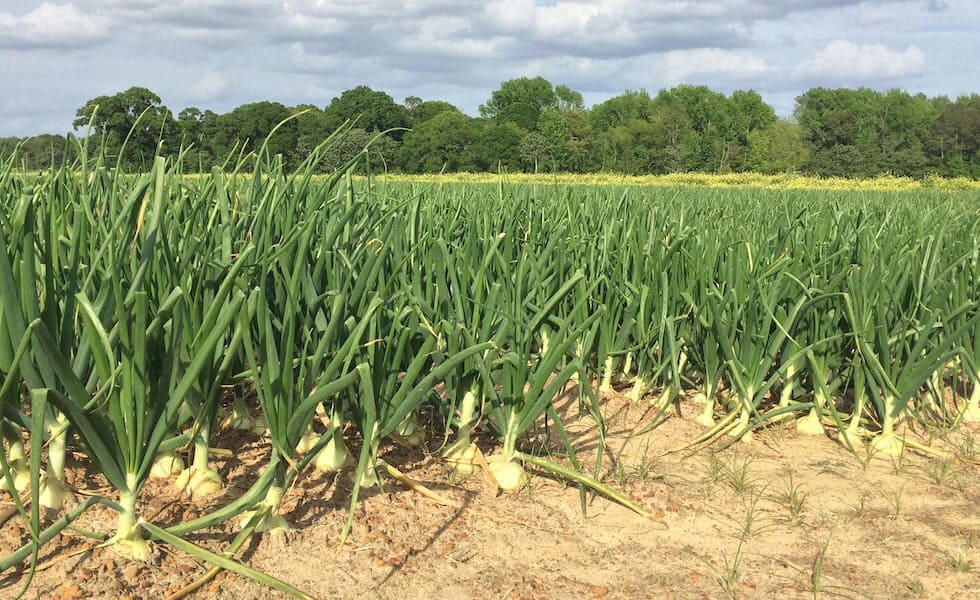
Pungency is the "bite" — the heat that makes your eyes water and lingers on your breath. It comes from sulfur the onion pulls out of the soil. Onions grown in low-sulfur soil, like the sandy fields around Vidalia, Georgia, turn out mild. Onions grown for long storage tend to be high in sulfur, which is exactly what keeps them from rotting in the pantry.
Water content matters too. Sweet onions are juicy and thin-skinned, so they're wonderful raw but bruise easily and don't keep long. Storage onions are drier and denser with thick papery skins, so they'll last for months and hold up to long cooking.
Here's the surprise most people don't know: sweet onions usually don't have much more sugar than regular onions. They taste sweeter because there's less sulfur heat covering up the sugar that's already there. Cook a sharp yellow onion low and slow and the heat cooks off, which is why a pungent onion can caramelize into something even sweeter than a sweet onion.
Onion Pungency Chart: From Mild to Sharp
Here's where common onions fall on the mild-to-sharp scale when eaten raw. Tap any name to jump to its full profile.
Think of this as a starting point. The same variety can run milder or sharper depending on the farm, the weather and how long it's been stored.
Quick Picks: What Are You Making?
Yellow Onions
The workhorse of the kitchen. Yellow onions make up the large majority of the U.S. onion crop, and if a recipe just says "onion," this is the one it means. Raw, they're sharp. Cooked, they turn rich, golden and deeply savory.
Yellow Storage Onion
SharpThis is the everyday onion sold in mesh bags at every grocery store. Storage varieties are bred with thick skins and high sulfur content, which gives them a strong bite raw but lets them sit in a cool pantry for months without spoiling.
Where they really shine is in long cooking. That sulfur heat mellows out completely, and their natural sugars brown beautifully, making them the best all-around choice for caramelized onions, French onion soup, pot roast, chili and almost any savory base.
Spanish Yellow (Sweet Spanish)
MildSpanish onions are the big, round yellow onions you'll often see sold loose. They're larger, juicier and noticeably milder than standard storage onions, sitting comfortably between a sharp yellow and a true sweet onion.
That size and mildness make them a great choice for thick onion rings, grilled slices on a burger, or anywhere you want one onion to go a long way. They don't store quite as long as smaller storage onions, so use them within a few weeks.
Cipollini
MildPronounced "chip-oh-LEE-nee," these small, flattened onions come from Italy and are prized for roasting. They have thin, golden skin, a slightly higher sugar content than most onions, and dense flesh that holds together when cooked whole.
Roast them in balsamic vinegar, braise them alongside short ribs, or skewer them for the grill. They're fiddly to peel — a quick 30-second dip in boiling water loosens the skins.
White Onions
Crisp, clean and sharp. White onions have thinner skins and a higher water content than yellow onions, with a bright, punchy flavor that doesn't linger as long. They're the backbone of Mexican and Latin American cooking.
White Onion
SharpThe standard white onion is sharper than a yellow onion raw but cooks up softer and slightly less sweet. Its crisp texture and clean finish make it the classic choice for salsa, pico de gallo, guacamole and taco toppings, where you want onion flavor that cuts through rich, spicy food.
White onions also work beautifully in stir-fries and quick sautés, and they're the traditional pick for Southern-style hush puppies and chow-chow.
Mexican White (Cebolla Blanca)
MediumSometimes sold as "knob onions" with their green tops still attached, Mexican white onions are smaller, juicier and a bit milder than standard white onions. Grilled whole until charred — cebollitas asadas — they're a staple alongside carne asada. Use the green tops just like scallions.
Red Onions
The color makes them the go-to raw onion for salads and sandwiches, and their flavor is milder than most yellow or white onions. Their deep purple-red skin comes from the same antioxidants found in red cabbage and blueberries.
Red Onion
MediumRed onions bring color and a gentle bite to salads, burgers, grain bowls and Greek dishes. If they're a little too strong for you raw, soak the slices in ice water for 10 minutes — it rinses away much of the harshness and makes them extra crisp.
They're also the best onion for quick pickling: in vinegar they turn a brilliant hot pink. When cooked for a long time, red onions can fade to a dull gray-purple, so they're better grilled or roasted quickly than stewed.
Tropea Red (Red Torpedo)
MildThis elongated Italian red is famous for its sweetness — mild enough to eat raw like an apple, as some Calabrians do. True Cipolla Rossa di Tropea carries a protected origin label in Europe, but "torpedo" red onions grown elsewhere are similar. Sliced thin, they're superb on tomato salads and pizza.
Red Creole
SharpAn old Southern variety with a strong, spicy bite and excellent keeping quality. Red Creoles are smaller and more pungent than standard reds, which makes them better for cooking than eating raw. They're a natural fit for gumbo, jambalaya and étouffée.
Get the slices right.
Raw on top? Go sweet or red. Grilled on the side? A thick Colossal sweet onion slice holds together on the grates and turns jammy in minutes.
Sweet Onions
Sweet onions are grown in low-sulfur soil, which gives them very little heat. They're juicy, thin-skinned and mild enough to eat raw by the slice. The trade-off: all that water means they bruise easily and don't keep as long as storage onions. Many of the best-known sweet onions are tied to a specific place, and several are protected by law.
Vidalia
Very MildThe most famous sweet onion in America. Vidalias were first noticed in the 1930s when a Toombs County farmer found his onions were surprisingly mild, thanks to the region's sandy, low-sulfur soil. Today, Georgia law limits the Vidalia name to onions grown in a defined 20-county area of southeast Georgia, and it's protected by a federal marketing order as well.
Vidalias are flat on top and bottom, pale gold, and so mild many people eat them raw like an apple. They're legendary for onion rings, Vidalia onion pie, sweet onion casserole and simple slices on a tomato sandwich.
Texas 1015 (Texas Sweet)
Very MildDeveloped by Texas A&M researchers and released in the early 1980s, the 1015 gets its name from its recommended planting date: October 15. It's typically larger and rounder than a Vidalia, with a crisp, juicy texture and a reputation for not making you cry.
Because the Texas season starts in early spring, the 1015 is often the first domestic sweet onion of the year. Its size makes it a favorite for blooming onions and big onion rings.
Walla Walla Sweet
Very MildWalla Wallas trace back to onion seed brought from the island of Corsica by a French immigrant around 1900. Local farmers saved seed from the sweetest, most uniform onions for generations until they had the jumbo, round onion grown there today. The name is protected by a federal marketing order.
They're very juicy, very mild and often the sweet onion of summer once Georgia's crop winds down. They're best raw or lightly cooked — think burgers, salads and quick grilling.
Maui Sweet
Very MildGrown in volcanic soil on the upcountry slopes of Maui, these are among the mildest and juiciest onions anywhere, with a crisp, almost fruity sweetness. Production is small and most stay in Hawaii, so they're a rare treat on the mainland. Use them raw where their delicate flavor won't get lost.
Imperial Sweet
Very MildCalifornia's desert-grown sweet onion. Imperial Sweets are mild and juicy with a clean finish, and they help fill the gap in spring between Texas and Georgia sweets and the summer Northwest crop. Use them anywhere you'd use a Vidalia.
Peruvian Sweet
Very MildWhen North American sweet onions are out of season, Peru's harvest takes over. Grown in arid, low-sulfur desert soil, Peruvian sweets are mild and juicy and keep sweet onions on the table through fall and winter. They're often sold under brand names by importers.
OSO Sweet (Chile)
Very MildA brand of sweet onion grown in Chile's Central Valley and shipped north in late winter, bridging the gap until Texas sweets arrive. Flat, pale and mild, it's a good stand-in for Vidalias in the off-season.
Bermuda Onion
MildThe original American sweet onion. Bermuda-type onions were a major crop in South Texas in the early 1900s and were the ancestors of many modern sweet varieties, including the Granex types grown for Vidalia. Today "Bermuda" is used loosely for any large, flat, mild onion.
Sweet Onions Side by Side
| Sweet Onion | Where It's Grown | Typical Season | Shape | Flavor | Protected Name? |
|---|---|---|---|---|---|
| Vidalia | 20-county area, SE Georgia | Late April–summer | Flat top & bottom | Very mild, sugary | Yes — state law + federal order |
| Texas 1015 | Rio Grande Valley, TX | March–May | Large, round | Very mild, crisp | No (variety name) |
| Walla Walla | Walla Walla Valley, WA/OR | June–September | Jumbo, round | Very mild, very juicy | Yes — federal order |
| Maui | Kula, Maui, HI | Much of the year (small crop) | Flat to round | Ultra mild, fruity | Name tied to Maui |
| Imperial Sweet | Imperial Valley, CA | Spring–early summer | Round | Mild, clean | No |
| Peruvian Sweet | Coastal Peru | September–February | Flat to round | Mild, juicy | No |
| OSO Sweet | Central Valley, Chile | January–March | Flat | Mild | Brand name |
| Bermuda | Historic; various | Varies | Flat | Mild | No |
Genuine Vidalias, shipped to your door.
Vidalia onions are available seasonally, typically April through August. Order online at VidaliaOnions.com and we'll ship by UPS anywhere in the lower 48 U.S. states.
Shallots
Shallots grow in clusters like garlic, with several cloves under one skin. Their flavor is finer and more delicate than an onion's, with a hint of garlic. Chefs reach for them in sauces and dressings where a regular onion would be too coarse.
Shallots — French Grey, Pink & Banana
MediumFrench grey shallots (griselle) have rough, grayish skin and the most intense, complex flavor — the true chef's shallot. Pink or Jersey shallots are the common grocery-store type, round with coppery-pink skin and a milder taste. Banana shallots (echalion) are long and large, a cross between an onion and a shallot, and much easier to peel and chop.
Mince them raw into vinaigrettes and mignonette for oysters, melt them into butter for pan sauces and beurre blanc, or fry them crisp as a topping. In a pinch, substitute about one small shallot for every 1/4 cup of chopped onion.
Small & Specialty Onions
Bite-sized onions meant to be cooked whole. They come in white, yellow and red, and they bring a gentle sweetness and charming look to braises, roasts and holiday sides.
Pearl Onions
MediumTiny onions about the size of a marble. They're a classic in beef bourguignon and coq au vin, glazed in butter and sugar as a holiday side, creamed for Thanksgiving, or pickled as the garnish in a Gibson cocktail. Frozen, pre-peeled pearl onions save a lot of work and are perfectly good for cooking.
Boiling Onions
MediumA step up in size from pearl onions, boilers are small storage onions harvested young. They're the classic choice for roasting around a chicken or pot roast and for old-fashioned creamed onions, and they hold their shape well in long-simmered stews.
Green Onions & Onion Cousins
Fresh, leafy alliums sold with their green tops on. They're harvested before (or without) forming a big bulb, so they're perishable and belong in the refrigerator — but they bring a fresh, grassy onion flavor nothing else can match.
Scallions (Green Onions)
Very MildScallions and green onions are the same thing: young onions with a straight, slender white base and no real bulb. The white part is a little stronger and good for cooking; the green tops are mild and best raw. Slice them over chili, baked potatoes, fried rice, soups and deviled eggs. Stand them in a glass of water and they'll even regrow.
Spring Onions
MildSpring onions look like oversized scallions with a small round bulb at the bottom. They're regular onions — sweet, red or white — pulled early before the bulb fully develops. They're sweeter and more tender than mature onions and are fantastic grilled whole, halved lengthwise, with olive oil and salt.
Leeks
MildLeeks look like giant scallions, with a thick white shaft and flat, fanned dark-green leaves. Their flavor is soft, sweet and buttery when cooked. Use the white and pale-green parts in potato-leek soup, quiches, gratins and braises. Grit hides between the layers, so slice first, then rinse well in a bowl of water.
Ramps (Wild Leeks)
SharpWild ramps are foraged from eastern forests for just a few weeks each spring. They have broad, flat leaves, a slender reddish stem and a powerful garlic-onion punch. Sauté them with eggs, fold them into pesto or pickle the bulbs. Many areas encourage harvesting only a leaf per plant to protect wild populations.
Chives
Very MildThe most delicate member of the family. Chives are thin, hollow green stems used as an herb rather than a vegetable. Snip them over baked potatoes, scrambled eggs, soups and cream cheese at the very end — heat quickly dulls their flavor.
All Onions Compared
A one-glance reference for every major onion type. Pungency is rated for raw onions, from ● (mild) to ●●●●● (sharp).
| Onion | Raw Flavor | Cooked Flavor | Pungency | Keeps | Best For |
|---|---|---|---|---|---|
| Yellow storage | Sharp, hot | Rich, deep, sweet | ●●●●○ | 2–3 months | Caramelizing, soups, all-purpose |
| Spanish yellow | Mild, juicy | Sweet, soft | ●●○○○ | 3–6 weeks | Onion rings, grilling |
| Cipollini | Mild | Very sweet, creamy | ●●○○○ | 1 month | Roasting whole |
| White | Sharp, clean | Mild, soft | ●●●●○ | 1–2 months | Salsa, tacos, stir-fries |
| Red | Mild-medium, peppery | Sweet; color fades | ●●●○○ | 1–2 months | Salads, pickling, burgers |
| Red Creole | Hot, spicy | Savory | ●●●●● | 3+ months | Cajun cooking |
| Sweet (Vidalia, 1015, Walla Walla) | Very mild, sugary | Sweet, melts quickly | ●○○○○ | Weeks (longer wrapped & refrigerated) | Raw, onion rings, casseroles |
| Shallot | Delicate, garlicky | Sweet, refined | ●●●○○ | 1 month | Sauces, vinaigrettes |
| Pearl / boiling | Medium | Sweet, tender | ●●●○○ | 1 month | Braises, creamed onions |
| Scallion | Fresh, grassy | Mild | ●○○○○ | About 1 week (fridge) | Garnish, stir-fries |
| Leek | Grassy | Buttery, sweet | ●●○○○ | 1–2 weeks (fridge) | Soups, quiche |
| Ramps | Strong garlic-onion | Garlicky | ●●●●○ | Days (fridge) | Pesto, eggs |
Onion Nutrition Facts
All onions are naturally fat-free, cholesterol-free and very low in sodium, with a little fiber and potassium. The differences between types are small: shallots and leeks are the most nutrient-dense per bite, scallions bring the most calcium, and sweet onions are the lightest of the bulb onions.
At a Glance
| Onion (per serving below) | Calories | Carbs | Fiber | Sugars | Protein | Potassium |
|---|---|---|---|---|---|---|
| Yellow Onion | 60 | 13g | 3g | 9g | 1g | 270mg |
| White Onion | 50 | 11g | 2g | 9g | 1g | 210mg |
| Red Onion | 70 | 15g | 3g | 9g | 1g | 290mg |
| Sweet Onion | 45 | 11g | 1g | 7g | 1g | 180mg |
| Shallots | 60 | 13g | 3g | 6g | 2g | 270mg |
| Scallions (Green Onions) | 30 | 7g | 3g | 2g | 2g | 280mg |
| Leeks | 50 | 13g | 2g | 3g | 1g | 160mg |
Nutrition values are calculated from USDA FoodData Central (yellow, white and red onions from Foundation Foods; sweet onions, shallots, scallions and leeks from SR Legacy) and rounded according to FDA labeling rules. Sweet onion values represent sweet onions as a group; individual varieties such as Vidalia may vary slightly. Natural produce varies by growing conditions, so treat these as typical values.
Tips for Buying Fresh Onions
Whether you're picking from a bin or opening a box at the door, here's what to look for:
Sweet onion tip: sweet onions naturally have thinner, more delicate skins than storage onions. Light scuffing is normal and doesn't affect flavor.
Storing Your Onions
Storage onions (yellow, white, red) like it cool, dry, dark and airy — a pantry, basement or garage that stays cool. Keep them in a mesh bag, a basket or an open bin, never a sealed plastic bag. Don't refrigerate whole storage onions; the humidity makes them soft and moldy.
Sweet onions are the exception. Because they're so juicy, they keep best in the refrigerator, each one wrapped individually in a paper towel or newspaper so they don't touch. The old Southern trick works too: drop them one at a time into a leg of clean pantyhose, tying a knot between each, and hang it somewhere cool. Snip one off below a knot whenever you need it.
Keep onions away from potatoes. Onions release gases and moisture that make potatoes sprout faster, and potatoes return the favor.
Chopped onions also freeze well for cooking. Spread them on a tray, freeze, then bag them. They'll lose their crunch, but they're perfect for soups, sauces and casseroles.
Onion FAQ
Why do onions make you cry?
Cutting an onion breaks its cells and sets off a chemical reaction that releases a sulfur gas into the air. When it reaches your eyes, they water to wash it away. Chilling the onion for 30 minutes, using a very sharp knife and cutting the root end last all help. Sweet onions have less sulfur, so they cause fewer tears.
Can I substitute one onion for another?
In cooked dishes, usually yes — yellow, white, red and sweet onions are close enough that most recipes will turn out fine. In raw dishes, the difference is bigger: swapping a sharp white onion in for a sweet one will make a salad much hotter. Shallots can stand in for onion in small amounts, but onions are a coarse substitute for shallots in delicate sauces.
Are sweet onions actually sweeter?
Mostly they're just less hot. Sweet onions are grown in low-sulfur soil, so there's less pungency to hide the sugar. Many storage onions actually have as much or more sugar, which is why they caramelize so well once the heat cooks off.
What's the difference between a scallion and a green onion?
Nothing — they're two names for the same thing. Spring onions are different: they have a small round bulb at the base.
Why can only certain onions be called Vidalia?
Georgia law (the Vidalia Onion Act of 1986) and a federal marketing order restrict the name to sweet onions of approved varieties grown within a defined production area in southeast Georgia. An onion grown from the same seed anywhere else can't legally be sold as a Vidalia.
Which onion is best for caramelizing?
Yellow onions are the classic choice — they turn deep golden and develop the richest flavor. Sweet onions caramelize faster but release more water and can taste one-note sweet. Red onions work but turn darker and slightly jammy.
How can I make raw onions less harsh?
Slice them, then soak in ice water for 10 minutes and pat dry. A splash of vinegar or lime juice also tames the bite — that's the idea behind quick-pickled onions.
Order Genuine Vidalia Onions
There's nothing quite like a box of real Vidalia onions on the counter. Grown in Georgia's sandy, low-sulfur soil, they're sweet enough to eat raw and perfect for onion rings, casseroles and summer sandwiches. Order online at VidaliaOnions.com and we'll ship them straight to your door.
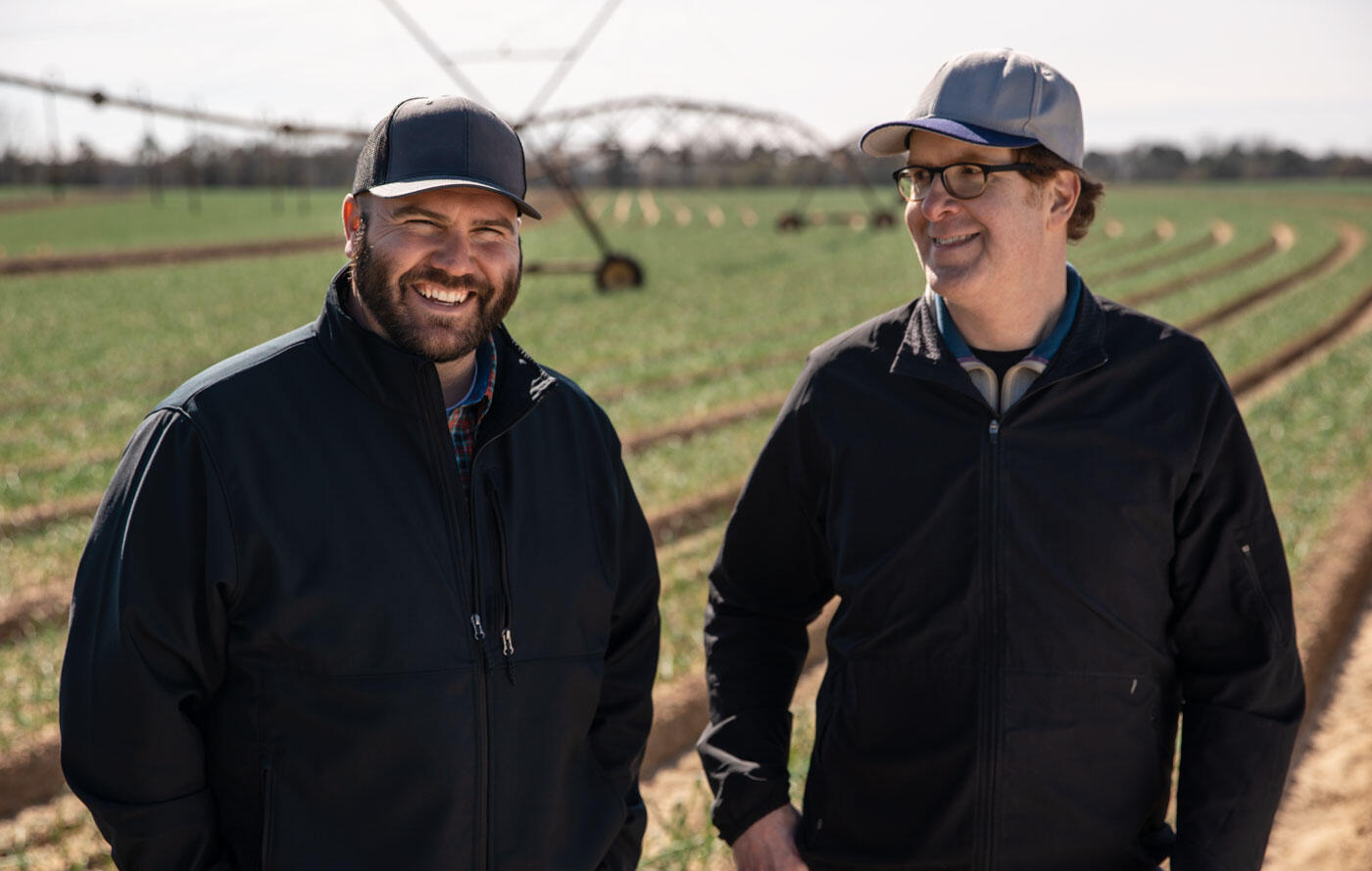
Aries Haygood (left) ~ Peter Askew (right)


Why does Miss Onion own a cell phone?
In case Mr. Onion rings.
Onions.com
This is the humble online onion home of A&M Farms in Lyons, Georgia USA. Proprietors: Aries Haygood & Peter Askew.